News
Greener websites: sustainable web design
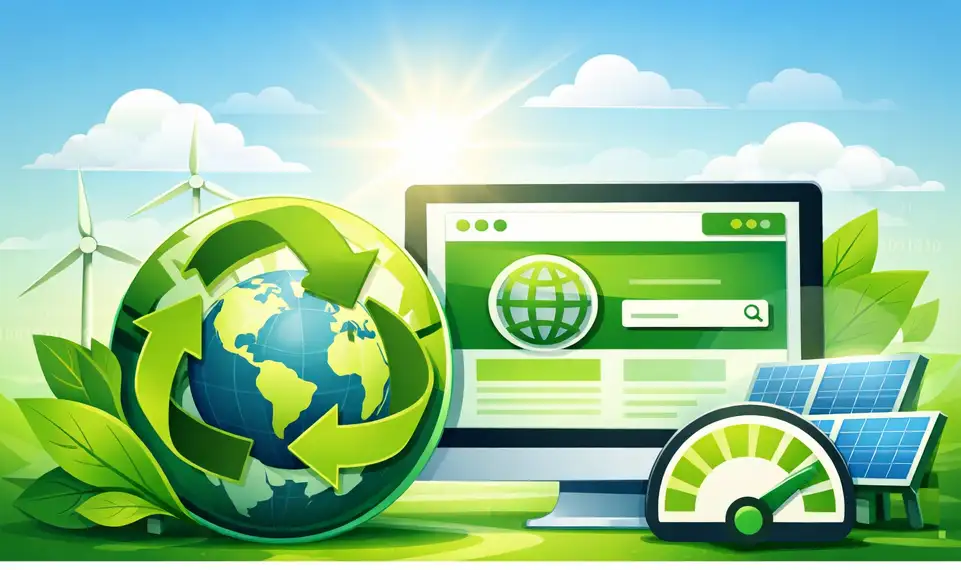
🌍 Sustainable Web: Designing Lightweight Sites to Reduce Digital Impact
🧩 Sustainability Starts with Design
When we talk about sustainable websites, we often think about hosting or data center emissions, but the real starting point is how a site is designed. A conscious approach to development allows us to reduce page weight, optimize resources, and improve overall performance.
Writing essential code, avoiding unnecessary features, and using only what's truly needed means reducing the amount of data transferred each time a user visits the site. This has a double benefit: on the one hand, pages load faster, and on the other, it reduces the energy consumption required to run them.
Graphic design choices also have an impact. Optimized images, thoughtfully used videos, lightweight fonts, and clean layouts make navigation smoother and less resource-intensive. Essential design isn't just an aesthetic trend, but a concrete solution for creating more efficient digital experiences.
The structure of information plays an equally important role. A clear architecture allows users to quickly find what they're looking for, avoiding unnecessary loading times and complex paths. Fewer steps mean fewer server requests and therefore lower energy consumption.
Designing with this approach means considering sustainability as a technical requirement, on a par with security or usability. It's a choice that improves website performance while simultaneously helping reduce the environmental impact of digital technology.
⚡ Efficient Infrastructure and Mindful Hosting
Beyond code and design, the infrastructure hosting a website also plays a crucial role. The servers that keep web pages online consume energy continuously, which is why it's crucial to select efficient hosting solutions that meet the project's real needs.
A well-sized infrastructure avoids waste: using resources that exceed actual traffic means wasting energy, while an optimized configuration allows for high performance with less impact. Technologies such as advanced caching, content distribution via CDN, and database optimization reduce server load and make each visit more efficient.
Hosting reliability is also a sustainability factor. A stable, fast, and well-configured website avoids constant refreshes, errors, and repeated requests that increase data traffic. Each avoided operation represents a small energy saving, which, when multiplied by thousands of users, becomes significant.
Choosing the right infrastructure is therefore not just a technical decision, but a strategic step in building a responsible digital project. Evaluating performance, energy efficiency, and scalability allows you to create sites that can grow over time without unnecessarily increasing consumption.
A thoughtful approach to hosting complements the work done during the development phase, making the site not only fast and efficient, but also more sustainable in the long run.
🚀 Performance, SEO, and Sustainability: One Goal
A lightweight and optimized website benefits not only the environment, but also the companies that use it. Reduced loading times improve the user experience, increase time spent on pages, and improve search engine rankings.
Digital sustainability is therefore intertwined with SEO and performance. Reducing page weight, optimizing resources, and improving speed means making the site more competitive while simultaneously reducing energy consumption. This is a concrete example of how efficiency and environmental responsibility can go hand in hand.
Furthermore, a well-structured project requires fewer corrective actions over time. Clean code and adequate infrastructure reduce the need for invasive updates or complete overhauls, extending the site's lifecycle and limiting the consumption of new resources.
This approach reflects a more mature vision of digital, in which technical quality also becomes an ethical choice. Companies like Crisandcris work precisely in this direction: developing custom websites that combine speed, efficiency, and environmental impact, choosing appropriate and sustainable technological solutions.
The result is a lighter, faster, and more responsible web, capable of offering value to businesses without unnecessarily burdening the planet. 🌱💻
❓ FAQ – Sustainable Websites and Responsible Development
🌱 Can a website really have an environmental impact?
Yes. Every web page requires energy to load: active servers, data transfer, and the use of user devices. Optimizing page weight, reducing server requests, and choosing efficient infrastructures can reduce navigation-related emissions.
⚡ Is a faster website also more sustainable?
Generally speaking, yes. A fast website transfers less data, requires less processing time from servers, and consumes less energy on user devices. Speed is therefore an indicator of both performance and energy efficiency.
🧩 What does it mean to create a "light" website?
It means using clean code, optimized images, essential functionality, and a clear content structure. Eliminating superfluous elements reduces page weight and improves the browsing experience.
🌍 Does hosting affect a website's sustainability?
Yes. Servers consume energy continuously. Choosing efficient, well-sized hosting solutions with optimized infrastructure helps reduce the overall environmental impact of your digital project.
🚀 Does a sustainable website also help SEO?
An optimized, fast, and well-structured website improves the user experience and facilitates search engine crawling. These factors are positive for rankings and demonstrate that sustainability and performance can go hand in hand.
Siamo partner sostenibili al tuo servizio
About us: Crisandcris.net
We are a web agency made up of web designers, developers, and graphic designers. We develop IT systems, websites, and provide comprehensive digital marketing: SEO optimization, advertising campaigns, social media management, and newsletters.
We are ready to help you realize your project.
Our goal is customer satisfaction, improving our services, and offering genuine, valuable assistance!
If you've used our services, writing a review will motivate us to improve our service.
You can leave a review on our Google profile:
https://g.page/r/CVQKtj0BpS0cEAo/review
Visit our social media
Facebook: https://www.facebook.com/crisandcrisweb
Instagram: https://www.instagram.com/crisandcrisweb/
Linkedin:
https://www.linkedin.com/company/crisandcris/
https://www.linkedin.com/in/cristinagalia/
Write to us! Fill out the contact form or send an email; you'll find the contact information on the contact page.